
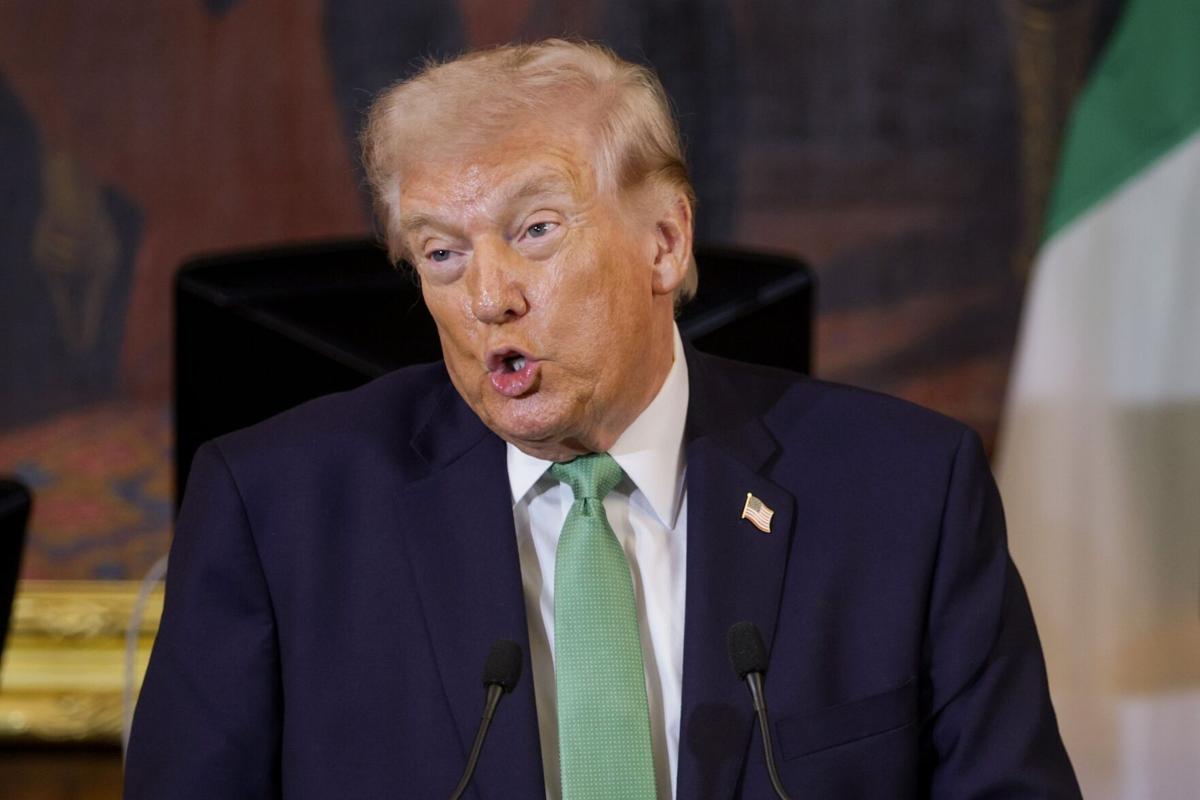
Large, directional bets were placed in US stock futures and crude oil markets approximately 15 minutes before President Donald Trump announced a halt to planned strikes on Iranian energy infrastructure, trading records show, in a pattern that ethics and securities law experts say warrants a formal investigation.
At approximately 6:50 a.m. EST on Monday, March 23, 2026, S&P 500 e-Mini futures recorded a sharp and isolated spike in volume, 15 minutes before Trump’s Truth Social post. A corresponding move was observed in oil futures. Whoever placed those trades, buying equities and shorting crude at 6:50 a.m., stood to profit significantly from the market reaction that followed. Stocks surged more than 2.5% and West Texas Intermediate crude fell nearly 6% within minutes of the post.[1]
The 15-minute gap between the 6:50 a.m. trades and the 7:05 a.m. post is, analysts say, inconsistent with a market reaction to news that had not yet been published.
No investigation has been publicly announced. The Securities and Exchange Commission, which has the authority to subpoena brokerage records and compel testimony in such cases, has not confirmed whether it is examining the trading activity.
Named Individuals With Documented Financial Exposure
The following individuals had either privileged access to the decisions that generated the market-moving announcements documented in this report, or a direct financial stake in the instruments and platforms those announcements moved, or both.
Donald Trump holds a significant personal stake in Trump Media and Technology Group, whose stock ticker is DJT — the same initials he used to sign his April 9, 2025 “GREAT TIME TO BUY” post. Trump Media rose 22.67% that day. The Brennan Center for Justice estimated Trump had pocketed approximately $3 billion from business enterprises since taking office in January 2025.[8]
Jared Kushner, Trump’s son-in-law, conducted the Sunday night Iran talks alongside Steve Witkoff that directly preceded the March 23 announcement, confirmed publicly by Trump. He simultaneously manages Affinity Partners, which received a $2 billion investment from the Saudi Public Investment Fund. Saudi state revenues are directly sensitive to oil prices. A 6% crash in crude in a single morning has direct financial consequences for entities in which Kushner’s business partners are invested. No Kushner trading disclosure around the announcement has been reported.[9]
Steve Witkoff, Trump’s special envoy, co-led the Sunday night Iran talks alongside Kushner and had direct first-hand knowledge of the state of US-Iran diplomacy in the hours before Trump posted. No examination of his trading activity around the announcement has been reported.[10]
Howard Lutnick, Secretary of Commerce, was present in the Oval Office while Trump composed the April 9, 2025 tariff pause post, according to CNBC, while simultaneously having told CNN days earlier that there was no chance of a reversal. He is the former CEO of Cantor Fitzgerald, one of the world’s largest fixed-income broker-dealers, with extensive personal financial market relationships. No examination of his trading activity in the relevant period has been publicly reported.[11]
Scott Bessent, Treasury Secretary, was also present during the April 9 tariff post composition. Before joining the administration, Bessent ran Key Square Group, a macro hedge fund with exposure to currency and commodity markets. His formal written request from Senator Warren for an explanation of advance tariff information provided to Wall Street contacts went unanswered.[12]
Donald Trump Jr. holds a financial stake in Polymarket through his firm 1789 Capital and a paid advisory role at rival Kalshi. He was directly involved in the $TRUMP meme coin launch and World Liberty Financial. Both DOJ and CFPB investigations into Polymarket were closed without charges after his father took office. Any increase in Polymarket’s valuation benefits him financially.[13]
Marjorie Taylor Greene, Member of Congress, bought between $21,000 and $315,000 in stocks the day before and the day of the April 9, 2025 tariff announcement, according to a ProPublica review of financial disclosures. She attributed the trades to a financial adviser acting independently.[14]
More than a dozen members of Congress reported stock transactions in the days immediately surrounding the April 9, 2025 tariff reversal, according to a CNN analysis of STOCK Act filings. All denied having advance briefings. None has been formally investigated.[15]
Michael Selig, CFTC chairman appointed by Trump, has publicly stated he will back Kalshi in state-level legal challenges. Any CFTC ruling favouring the prediction markets industry accrues directly to the financial interests of Trump Jr., who holds stakes in both Kalshi and Polymarket.[16]
Suspicious Polymarket Activity on the Eve of the Announcement
The 15-minute window in futures markets was not the only suspicious trace left by the morning of March 23, 2026.
On Polymarket, the world’s largest prediction market, ten new wallets were created simultaneously on Sunday, March 22, with no prior transaction history. Those accounts bet a cumulative $160,000 on a US-Iran ceasefire before the end of March. After Trump’s 7:05 a.m. post the following morning, those accounts had already gained more than $300,000 in unrealised value. The accounts were identified and flagged publicly before Trump posted by X user @itslirrato. “The accounts definitely look like someone with some degree of inside info,” said Ben Yorke, a former CoinTelegraph researcher.[2]
The scale of the underlying futures trades was also larger than initial reports indicated. In the one-minute window around 6:50 a.m. EST, Brent and WTI crude contracts worth roughly $580 million changed hands, four to six times the normal volume for that hour, and S&P 500 futures purchases totalled approximately $1.5 billion, according to reporting by NDTV.[3]
Bubblemaps, a blockchain analytics firm, identified a single Polymarket trader who made nearly $967,000 from bets on US and Israeli military actions against Iran since 2024, with an 83% overall win rate and 93% on trades over $10,000. Winning bets preceded Israeli strikes in October 2024, US airstrikes in June 2025, and the joint attack that started the current war on February 28, 2026, each placed hours before the public announcement. “Having win rates in the 80% to 90% range is just too good to be true,” said Todd Phillips, finance professor at Georgia State University and former CFTC advisory board member.[4] Six accounts made approximately $1.2 million on the February 28 strikes alone.[5]
Donald Trump Jr. joined Polymarket’s advisory board in August 2025. His venture capital firm, 1789 Capital, made a strategic investment in the company in the double-digit millions, according to a Reuters source. He simultaneously holds a paid advisory role at Polymarket’s chief rival, Kalshi. Both the Department of Justice and the Consumer Financial Protection Bureau had active investigations into Polymarket before Trump returned to the White House. Both were closed without charges after he took office.[6]
The Polymarket wallets created the night before do not change the central finding. They reinforce it. The question is the same as the one raised by the 6:50 a.m. futures spike: who knew the announcement was coming, and how did that knowledge move from the room where the decision was made to the markets where it was traded.
Israeli investigators have indicted two individuals, including a military reservist, for using classified information to place winning bets on Polymarket during the Iran conflict. The mechanism has been charged. In another country.[7]
Bipartisan legislation to ban federal officials from trading on prediction markets using non-public information has been introduced in the US Senate. It has not passed.
A Recurring Pattern
The Iran announcement is the latest in a series of incidents in which anomalous trading activity preceded major market-moving statements by the president or his administration.
On Wednesday, April 9, 2025, Trump posted to Truth Social at 9:37 a.m. EST: “THIS IS A GREAT TIME TO BUY!!! DJT.” At approximately 1:18 p.m. EST, the administration announced a 90-day pause on nearly all US reciprocal tariffs. The S&P 500 closed up 9.5%, one of its largest single-day gains in eight decades. The Nasdaq rose nearly 12%. Markets recovered approximately $4 trillion in value, roughly 70% of what had been lost in the preceding four trading days.[3]
In the days before the reversal, senior administration officials had publicly and repeatedly ruled out any pause. Commerce Secretary Howard Lutnick told CNN there was “no chance” Trump would reverse course. Trump himself told reporters from the White House: “We’re not looking at that.”[4]
Asked afterward when he had decided to reverse, Trump said: “I would say this morning. Over the last few days, I’ve been thinking about it.”[5]
That statement, if accurate, means a potential policy reversal was under active consideration inside the administration at the same time officials were publicly denying it.
According to reporting by CNBC, Lutnick and Treasury Secretary Scott Bessent were both present in the Oval Office while Trump composed the Truth Social post announcing the pause.[6] Neither man’s public statements nor their personal trading activity during the relevant period has been formally examined.
“He’s sending the message that he can effectively and with impunity manipulate the market,” said Kathleen Clark, a government ethics law professor at Washington University School of Law. “As in: Watch this space for future stock tips.”[7]
The White House disputed that characterisation. “It is the responsibility of the President of the United States to reassure the markets and Americans about their economic security in the face of nonstop media fearmongering,” a spokesman said.[8]
Trump also signed the post with his initials, DJT, which is the stock ticker for Trump Media and Technology Group, the parent company of Truth Social, in which Trump holds a significant personal stake. Trump Media closed up 22.67% that day, more than double the broader market. The White House did not address questions about whether the initials were intended to signal a buy in the company’s stock specifically.[9]
The Cryptocurrency Schemes
Concerns about pre-announcement trading extend to Trump’s cryptocurrency ventures.
On Friday, January 17, 2025, three days before his inauguration and before federal ethics rules fully applied, Trump launched a cryptocurrency token called $TRUMP. On-chain analysis commissioned by the New York Times found that 813,294 retail investors lost a combined $2 billion trading the coin. For every dollar in fees collected by the coin’s creators, investors lost approximately $20.[10]
One cryptocurrency wallet was funded with $1 million four hours before the public launch and purchased $5.9 million worth of tokens in the first minute of trading, later selling $20 million while retaining $96 million in holdings, according to blockchain analytics firm Bubblemaps.[11]
On Wednesday, April 23, 2025, a website connected to the Trump family announced that the top 220 holders of the $TRUMP coin would be invited to a private dinner with the president at his golf course outside Washington. The coin surged more than 60% following the announcement. Analysis found that certain traders had positioned ahead of the announcement before it was made public.[12]
A Bloomberg investigation found that 19 of the top 25 qualifying holders were likely foreign nationals. The top holder was Justin Sun, a Chinese national facing a civil lawsuit from the SEC alleging fraudulent market manipulation. That lawsuit was paused by the Trump administration after Sun invested $30 million in one of Trump’s other cryptocurrency ventures, World Liberty Financial.[13]
A November 2025 report by Democrats on the House Judiciary Committee, following a formal investigation, concluded that Trump’s cryptocurrency schemes had added billions of dollars to his personal net worth through activities described as “entangled with foreign governments, corporate allies, and criminal actors.”[16]
Key Figures Under Scrutiny
Ethics watchdogs and investigators have identified a small group of senior officials and family members whose proximity to Trump’s decision-making warrants formal examination.
Lutnick was publicly denying any tariff reversal was possible in the days before the April 9 announcement, while reportedly present in the Oval Office as Trump composed the post announcing it. The gap between his public statements and the private reality he was witnessing has not been examined under oath.[17]
Senator Elizabeth Warren wrote to Bessent requesting an explanation for reports that administration officials had provided advance tariff information to select Wall Street contacts while withholding it from the public. There is no public record of a response.[18]
Jared Kushner, Trump’s son-in-law and informal adviser, maintains documented financial relationships with foreign sovereign wealth funds, including a reported $2 billion investment from the Saudi Public Investment Fund into his private equity firm, Affinity Partners. His access to presidential thinking on Iran and Middle East policy, alongside management of funds exposed to commodity price movements, has been flagged by ethics groups as an undisclosed structural conflict.[19]
Donald Trump Jr. and Eric Trump were directly involved in the launch and promotion of the $TRUMP meme coin. Both publicly promoted the coin and stood to benefit materially from its price performance. Whether either positioned ahead of announcements that drove the coin’s price has not been formally examined.[20]
Representative Alexandria Ocasio-Cortez said publicly on 9 April 2025 that any member of Congress who had purchased stocks in the preceding 48 hours should disclose that immediately, adding she had been “hearing some interesting chatter on the floor.” Under the STOCK Act, those disclosures are required within 45 days and are publicly searchable.[21]
What the Law Says
US federal securities law prohibits trading on material, non-public information under Section 10(b) of the Securities Exchange Act of 1934 and the SEC’s Rule 10b-5. A presidential decision to halt military strikes against a major oil-producing nation’s energy infrastructure would almost certainly meet the legal definition of material information. The 15-minute gap establishes that the information was not public when those trades were placed.
Under the misappropriation theory established by the Supreme Court in United States v. O’Hagan (1997), any official who obtained non-public information through their government position and traded on it would be liable for securities fraud. The STOCK Act of 2012 separately bars government officials and members of Congress from trading on non-public government information.[22][23]
“This is a scenario that could expose the president to accusations that he engaged in market manipulation,” said Richard Painter, former chief ethics lawyer to President George W. Bush.[24]
The SEC and the Department of Justice both report to the executive branch, which is led by the president whose conduct is in question.
International Legal Exposure
Legal scholars and regulatory experts have identified potential violations of securities and anti-corruption law in multiple jurisdictions outside the United States.
Under the European Union’s Market Abuse Regulation, market manipulation can be established even in the absence of intent if a price was moved to an abnormal or artificial level. The prohibition covers any instrument listed or traded on European markets, regardless of where the trader is located. Crude oil futures and equity index derivatives are actively traded on European exchanges. The European Securities and Markets Authority can demand trading records from any EU-venue operator without requiring US cooperation.[25][26]
Scholars at Oxford University’s Faculty of Law assessed that the lower intent threshold under EU MAR made a viable case against the conduct described “more likely” than under US law.[27]
The UK Financial Conduct Authority operates an equivalent framework. The UK Bribery Act 2010, which applies to anyone who bribes a foreign public official, including heads of state, carries a maximum sentence of 10 years imprisonment and an unlimited financial penalty. Buyers of the $TRUMP coin who stated on record that they purchased access to Trump in order to influence US policy have described, on the Act’s statutory language, a potential Section 6 offence.[28][29][30]
The OECD Anti-Bribery Convention, ratified by 44 nations, prohibits any signatory from refusing to investigate foreign bribery on grounds of national economic interest. The Trump administration suspended enforcement of the US Foreign Corrupt Practices Act in February 2025, citing economic competitiveness. Legal analysts said that justification may itself constitute a violation of the Convention’s Article 5.[32][33]
The UN Convention Against Corruption prohibits conditioning access to a public official on a financial benefit. The US Senate formally resolved that foreign government purchases of $TRUMP coins violated the Constitution’s Foreign Emoluments Clause, which bars federal officials from accepting benefits from foreign governments without congressional consent.[34][35][36]
Possible Penalties
If charges were brought and convictions secured, the penalties under applicable law are substantial.
Under US federal law, conviction for securities fraud carries a maximum of 20 years imprisonment per count and fines of up to $5 million per violation. Wire fraud adds a further maximum of 20 years per count. Market manipulation under Section 9(a) of the Securities Exchange Act carries the same maximum. Federal bribery carries up to 15 years imprisonment and a fine equal to three times the value of the benefit involved, plus permanent disqualification from public office. STOCK Act violations carry up to five years imprisonment and disgorgement of all profits from the illegal trades.
Under the UK Bribery Act, individuals face up to 10 years imprisonment with no upper limit on financial penalties for organisations. Under EU Market Abuse Regulation, fines can reach 15% of total annual turnover for companies or €15 million for individuals, whichever is higher. The SEC may also seek civil disgorgement of all profits plus penalties of up to three times the amount gained.
While Trump is president, a 1973 Department of Justice Office of Legal Counsel memorandum, reaffirmed in 2000, holds that a sitting president cannot be criminally indicted. The Supreme Court’s 2024 ruling in Trump v. United States established broad immunity for official acts but did not extend that protection to personal financial conduct.[39]
After Trump leaves office, all criminal penalties listed above become available to prosecutors. The statute of limitations for federal securities fraud is five years. The meme coin launched in January 2025. The dinner scheme concluded in May 2025. Both remain within the prosecutorial window through 2030.
For those around Trump, including Lutnick, Bessent, Kushner, and the Trump sons, no presidential immunity applies. Federal charges are legally available now, subject only to the political will of an Attorney General who serves at the president’s pleasure.
What the Public Can Do
The Senate Banking Committee and the House Financial Services Committee hold independent subpoena authority and do not require Department of Justice approval to demand trading records or compel testimony. Citizens can contact their senators and representatives to request formal investigations into the trading activity identified in this report.
The Financial Conduct Authority accepts public reports of suspected market abuse at fca.org.uk. The Serious Fraud Office accepts confidential reports of suspected bribery at sfo.gov.uk. ESMA’s national partners, including BaFin in Germany, the AMF in France and the AFM in the Netherlands, each operate independent reporting mechanisms that do not require US cooperation.
Congressional financial disclosures for the period surrounding the 9 April 2025 tariff reversal are publicly searchable at efts.house.gov and efts.senate.gov. The trades are timestamped. The announcements are timestamped. The gap between them is visible to any member of the public willing to look.
Investors who suffered losses in the events described in this report may have grounds to participate in existing class action litigation or to pursue individual civil securities claims. The civil standard of proof is lower than the criminal threshold.
Footnotes
- CNBC Markets Desk, “Today’s market was defined by a single binary event,” CNBC, March 2026, https://www.cnbc.com.
- Ibid.
- Associated Press, “Trump told investors to ‘buy’ on social media hours before his tariff pause rose stocks,” PBS NewsHour, 10 April 2025, https://www.pbs.org/newshour/politics/trump-told-investors-to-buy-on-social-media-hours-before-his-tariff-pause-rose-stocks-raising-questions-about-manipulation.
- NBC News, “Experts, critics raise questions after Trump says ‘this is a great time to buy’ before pausing tariffs,” 10 April 2025, https://www.nbcnews.com/business/markets/trump-tariff-pause-experts-question-timing-trump-social-media-posts-rcna200526.
- Associated Press, “Trump’s ‘buy’ tip on social media before his tariffs pause made money for investors who listened,” 10 April 2025, https://www.times-standard.com/2025/04/10/trump-social-media-stock-surge/.
- CNBC, “Trump tariffs: White House seeks to isolate China with 125% import duties,” 10 April 2025, https://www.cnbc.com/2025/04/09/trump-tariffs-live-updates.html.
- Associated Press, “Trump’s ‘buy’ tip on social media,” 10 April 2025.
- Ibid.
- Ibid.
- Wikipedia contributors, “$Trump,” Wikipedia, last modified March 2026, https://en.wikipedia.org/wiki/$Trump. Citing New York Times analysis.
- CoinTelegraph, “Insider trading allegations surface as TRUMP memecoin floods Solana DEXs,” 19 January 2025, https://cointelegraph.com/news/insider-trading-allegations-surround-trump-memecoin.
- Wikipedia contributors, “$Trump,” Wikipedia.
- Congressman Sean Casten and Congressman Adam Smith, press release, “Casten, Smith Demand DOJ Investigation Into Trump Crypto Dinner,” 22 May 2025, https://casten.house.gov/media/press-releases/casten-smith-demand-doj-investigation-into-trump-crypto-dinner.
- Nick Lucchesi, “Why Trump’s Meme Coins Have Alarmed Both Crypto Insiders And Legal Experts,” Time, 22 January 2025, https://time.com/7209169/trump-meme-coins-crypto/.
- Ibid.
- Wikipedia contributors, “$Trump,” Wikipedia. Citing US House Judiciary Committee Minority Report, 25 November 2025.
- CNBC, “Trump tariffs: White House seeks to isolate China,” 10 April 2025.
- American Prospect, “We Can’t Count on Trump’s SEC to Tell Us If He Is Manipulating the Market,” 9 May 2025, https://prospect.org/economy/2025-05-09-trump-sec-market-manipulation/.
- Brennan Center for Justice, “Emoluments Violations in President Trump’s Second Term,” 2025, https://www.brennancenter.org/media/14688/download/2025_codifying_emoluments_clauses.pdf.
- Wikipedia contributors, “$Trump,” Wikipedia.
- NBC News, “Experts, critics raise questions,” 10 April 2025.
- United States v. O’Hagan, 521 U.S. 642 (1997); Dirks v. SEC, 463 U.S. 646 (1983).
- Stop Trading on Congressional Knowledge (STOCK) Act, Pub. L. 112-105, 126 Stat. 291 (2012).
- NBC News, “Experts, critics raise questions,” 10 April 2025.
- European Parliament and Council of the European Union, Regulation (EU) No 596/2014 on Market Abuse, 3 July 2016, Articles 12 and 15, https://eur-lex.europa.eu/legal-content/EN/TXT/?uri=CELEX%3A32014R0596.
- Ibid., Articles 7, 8, and 14.
- Oxford University Faculty of Law, “The Most Far-Reaching Securities Fraud in History? Trump, Tariffs, and Securities Law,” Oxford Law Blogs, 11 April 2025, https://blogs.law.ox.ac.uk/oblb/blog-post/2025/04/most-far-reaching-securities-fraud-history-trump-tariffs-and-securities-law.
- Financial Conduct Authority, “Market Abuse Regulation (MAR),” https://www.fca.org.uk/markets/market-abuse/regulation.
- UK Bribery Act 2010, c. 23, Section 6, https://www.legislation.gov.uk/ukpga/2010/23/section/6.
- Wikipedia contributors, “$Trump,” Wikipedia. Citing New York Times interviews with coin purchasers.
- Taylor Wessing LLP, “Bribery enforcement in the Trump era: international companies must proceed with caution,” 14 February 2025, https://www.taylorwessing.com/en/insights-and-events/insights/2025/02/dqr-bribery-enforcement-in-the-trump-era.
- Organisation for Economic Co-operation and Development, Convention on Combating Bribery of Foreign Public Officials in International Business Transactions, in force 15 February 1999, Article 5, https://legalinstruments.oecd.org/en/instruments/OECD-LEGAL-0293.
- Leigh Day Solicitors, “Suspending enforcement of the US Foreign Corrupt Practices Act,” 12 March 2025, https://www.leighday.co.uk/news/blog/2025-blogs/suspending-enforcement-of-the-us-foreign-corrupt-practices-act-a-backwards-step-in-the-fight-against-international-corruption/.
- United Nations Office on Drugs and Crime, United Nations Convention Against Corruption, in force 14 December 2005, Article 18, https://www.unodc.org/unodc/en/corruption/uncac.html.
- US Constitution, art. I, § 9, cl. 8 (Foreign Emoluments Clause).
- US Senate, S.Res.245, “A resolution condemning the financial entanglements of President Donald J. Trump with the $TRUMP meme coin,” 119th Congress, 2025, https://www.congress.gov/bill/119th-congress/senate-resolution/245/text.
- Bruegel Policy Brief, “How the European Union should respond to Trump’s tariffs,” https://www.bruegel.org/policy-brief/how-european-union-should-respond-trumps-tariffs.
- Wikipedia contributors, “Tariffs in the second Trump administration,” Wikipedia, March 2026, https://en.wikipedia.org/wiki/2025_United_States_tariffs_against_the_European_Union.
- Trump v. United States, 603 U.S. ___ (2024).